

Tankless Water Heater Equipment Models and Installation
Residential Tankless Water Heater Equipment guidance from Blue Conservation—the Greater Philadelphia area’s knowledgeable tankless hot water heater installation contractor. Expert selection, permitting, and professional installation.
Tankless Water Heater Equipment Selection
Once you have decided to install a new tankless water heater, whether you are converting from a traditional standard tank water heater or are replacing an older tankless model, Blue Conservation is ready to guide you through the selection, purchasing, and permitting process. Considerations such as sizing, manufacturer (i.e., Rinnai, Navien, Noritz, AO Smith, Rheem, Bosch, Bradford White), make/model, maintenance, optional features, acquiring permits, and applying for rebates can be a time-consuming process. Customer satisfaction is our only goal—we do not work for a particular brand, nor do our technicians work on commission, so the advice you receive is specific to your situation.
Enjoy going tankless! The benefits are numerous, and we are certain you will enjoy using any of the brand-name tankless water heater models you select. At Blue Conservation, we want to make certain you also enjoy the service and installation of your new equipment and the use of it for many years to come.
Tankless Water Heater Equipment Models
Ultra-High-Efficiency Condensing
Ultra-High-Efficiency Condensing Tankless Water Heaters extract and capture the heat released from the water heater unit’s exhaust, making them the most energy-efficient models available. Also, since the residual exhaust heat is used to produce the hot water, the exhaust gasses are cooler and less expensive venting material may be used.
Considerations for these models include:
High-Efficiency Non-Condensing
High-Efficiency Non-Condensing Tankless Water Heaters have only one heat exchanger and exhaust gas is vented out of the top of the unit. A simpler design has numerous advantages.
The considerations of high-efficiency non-condensing tankless water heater units include:
Rinnai Demand Duo—Hybrid-“Tankless” Water Heater
Rinnai’s Demand Duo product line of commercial water heaters is an ideal solution to meet heavy hot water demands. They combine the advantages of tankless units with a traditional storage tank and can accommodate commercial applications such as restaurants, hotels, or multi-family dwellings.
Keys to a Successful Tankless Water Heater Installation
For equipment selection and installation, we will review with you the following:
Five Important Considerations for Your Estimate
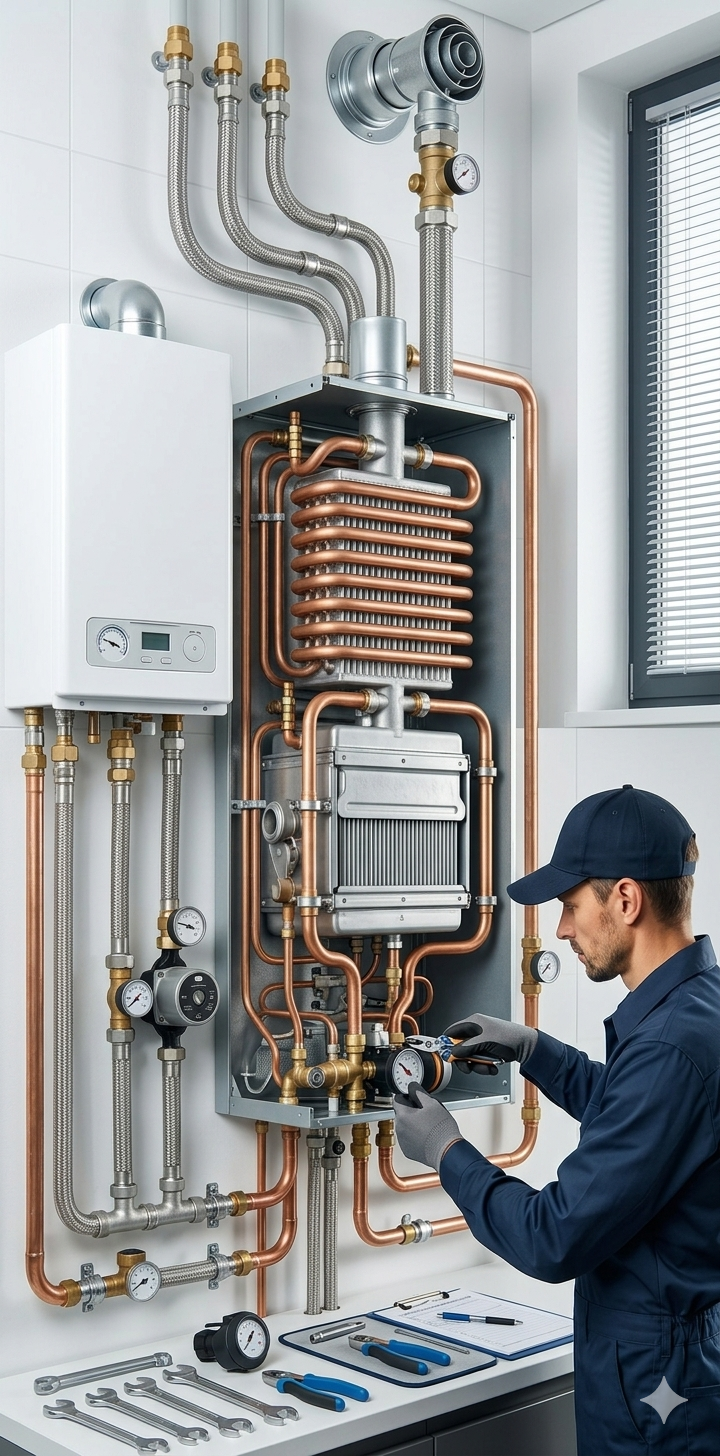
Professional Installation Planning
Blue Conservation reviews venting, utilities, and placement so your residential tankless water heater equipment performs reliably from day one.
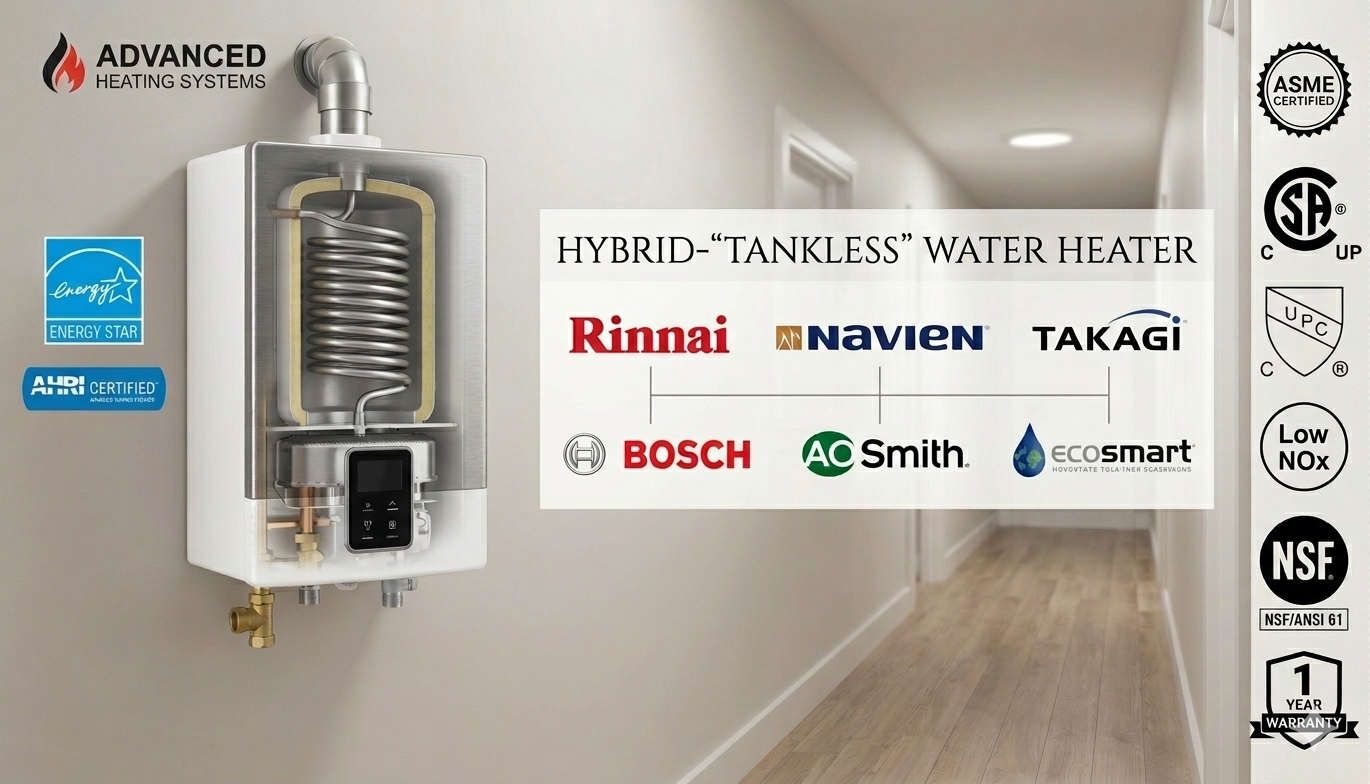
Hybrid Tankless Solutions
Demand Duo and hybrid systems combine tankless efficiency with storage capacity for heavy hot water demand.
Ready to Select and Install Your Tankless Water Heater?
Email service@blueconservation.com or text 484-469-0718 to request a quote or request service. A knowledgeable Blue Conservation team member will help with equipment selection, estimates, and installation scheduling.

Reach Out Anytime We’re Here to Help
Pages
Services
Useful Links
Copyright © 2025. Powered by Blue Conservation
Request Service or Information
Tell us how we can help. Call or text 484-469-0718 for emergencies.